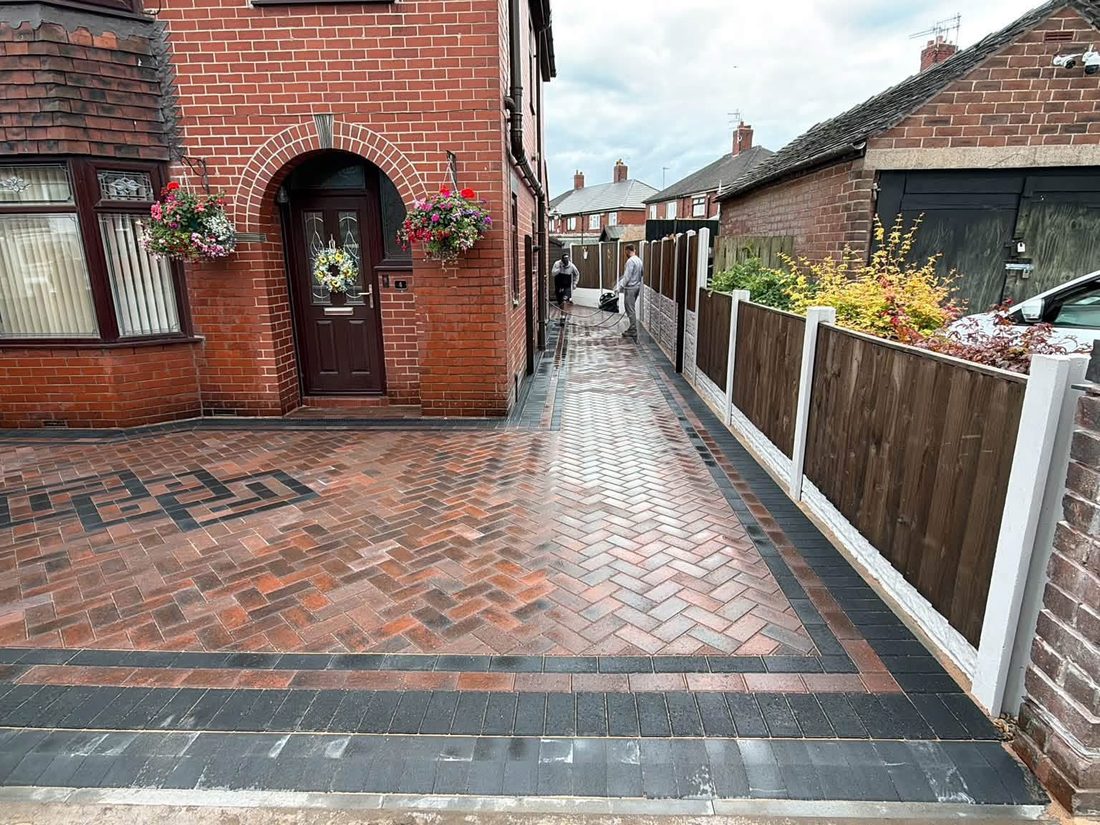
How long will a block paved driveway take?
A typical two car drive is around four to seven working days from digging out to jointing, depending on size, access and how much muck has to be carted away. Wet weather affects digging and concreting more than laying, and the written estimate gives you a realistic run of days.
Do I need planning permission for a new driveway?
For most homes, no, provided the surface is permeable or the water is directed to a lawn or border rather than straight into the road drain. Block paving with a permeable margin or a channel drain to a soakaway satisfies that. Front gardens in the Salisbury conservation area and the AONB villages can have extra conditions, and we will flag it if we think yours does.
Will weeds grow through it?
Far less than people expect if it is built right. Membrane under the sub base, tight joints and polymeric or weed inhibiting sand deals with the vast majority. What you cannot stop entirely is seed blowing in and germinating in the joint sand itself, which is a brush and an occasional treatment rather than a fault.
Can you match or extend my existing paving?
Often yes, if the block is still in production or close enough that a deliberate contrast border ties it together. Where a match is not realistic we will say so and suggest a design that makes the change look intentional instead of accidental.
Can you take the old concrete or tarmac away?
Yes. Breaking out and carting away old concrete, tarmac or a failed drive is normal work and it is priced in the written estimate rather than sprung on you on day one.