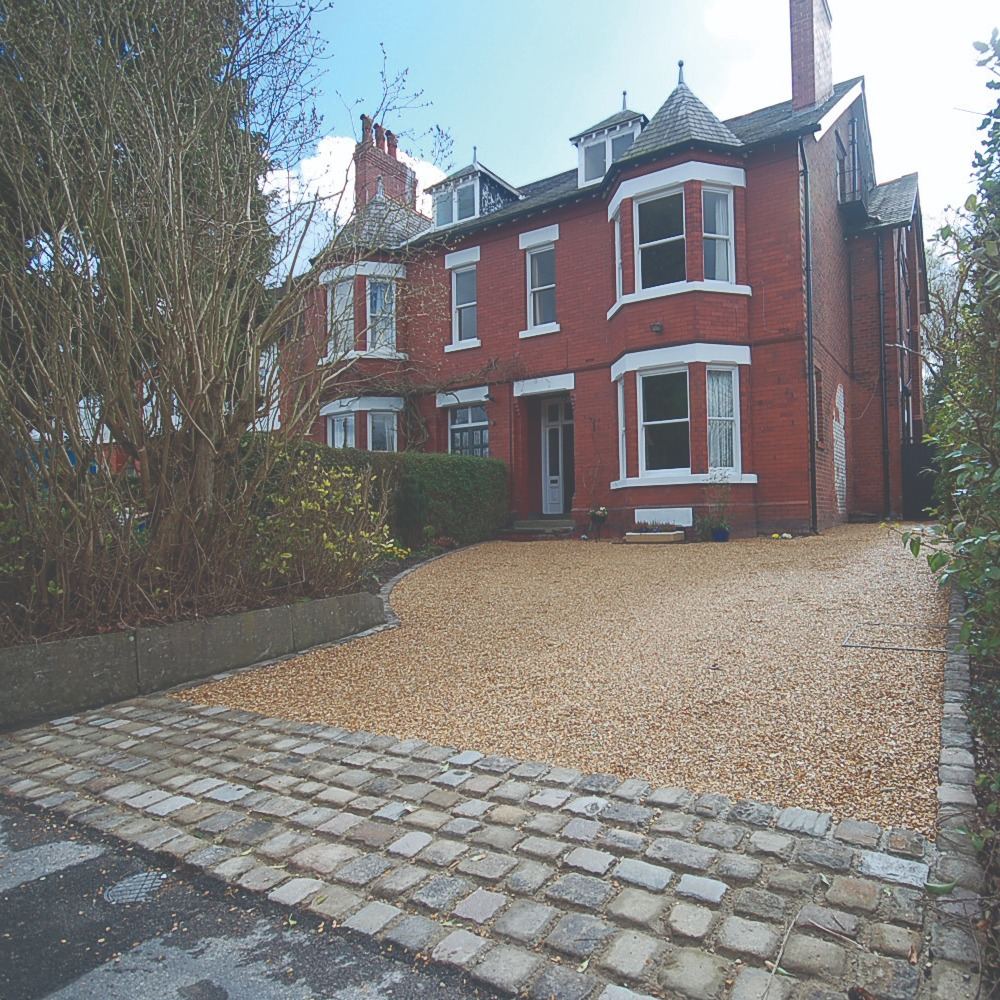
Gravel still suits a lot of Wiltshire and Dorset properties better than anything else, and it is by far the most forgiving surface for a long or awkward drive. Done properly it means a compacted sub base, a stabilising grid or membrane, solid edging and the right size stone. Done badly it means ruts, and gravel in the flowerbeds by March.

A gravel drive is not a load of stone tipped on soil. It gets excavated, membraned and built up on compacted type 1 exactly like any other drive, with the decorative stone as the wearing course on top. That is the difference between a drive and a set of ruts.
On slopes, turning areas and anywhere that gets heavy use, a gravel stabilising grid keeps the stone where it belongs and stops it migrating downhill. It also means you can use a smaller, better looking stone without it scattering every time somebody turns the wheel.
Brick, block, kerb, timber or steel edging bedded and haunched so the gravel has something to sit against. Most gravel that ends up on the lawn got there because there was nothing at the edge, or what was there was laid on nothing.
Angular stone locks together and stays put. Rounded pea shingle looks lovely in a photograph and rolls under a tyre. We will talk you through sizes, colours and what suits a working farm drive against a village cottage frontage before anything is ordered.
Usually around 35 to 50mm of decorative stone over a properly built base. Deeper is not better: a thick loose layer is what makes a drive feel like walking on a beach and what puts ruts in it. Depth is decided with you and stated in the estimate.
A well built and properly edged gravel drive loses very little. Expect to rake it occasionally and top up lightly after a few years, particularly at the entrance where tyres turn. If it is losing stone every year, the edging or the base is the problem rather than the gravel.
It can be, with a stabilising grid and the right angular stone, and plenty of drives around the villages outside Salisbury are exactly that. On a genuinely steep drive we would usually suggest a bound surface for at least the steepest section and gravel for the rest.
Generally yes, and noticeably so on a large area, because the wearing course costs a fraction of what blocks and the labour to lay them cost. The base work is much the same, though, and that is exactly where people are tempted to save and should not.
Yes, and if the base was built properly in the first place, a lot of that work carries over. It is worth mentioning at estimate stage if you think you might, because we can build the base and the edges with that in mind.
Based at New Street in Salisbury and working up to 100 miles out across Wiltshire, Hampshire, Dorset, Somerset and Berkshire, so a look at your job is rarely more than a couple of days away.
Send a photo or two through WhatsApp, or ring us, and we will come out and give you a free written estimate.