Services Recent Work Reviews Areas Contact Call us
Home/Services/Patios & Paths
Patios & Paths

Patios and paths, laid level first time

Indian sandstone, porcelain, granite and concrete slab patios, garden paths, steps and circle features. Laid on a full mortar bed with the falls run away from the house, priming where the slab needs it, and joints filled with a jointing compound rather than brushed in sand that washes out by autumn.

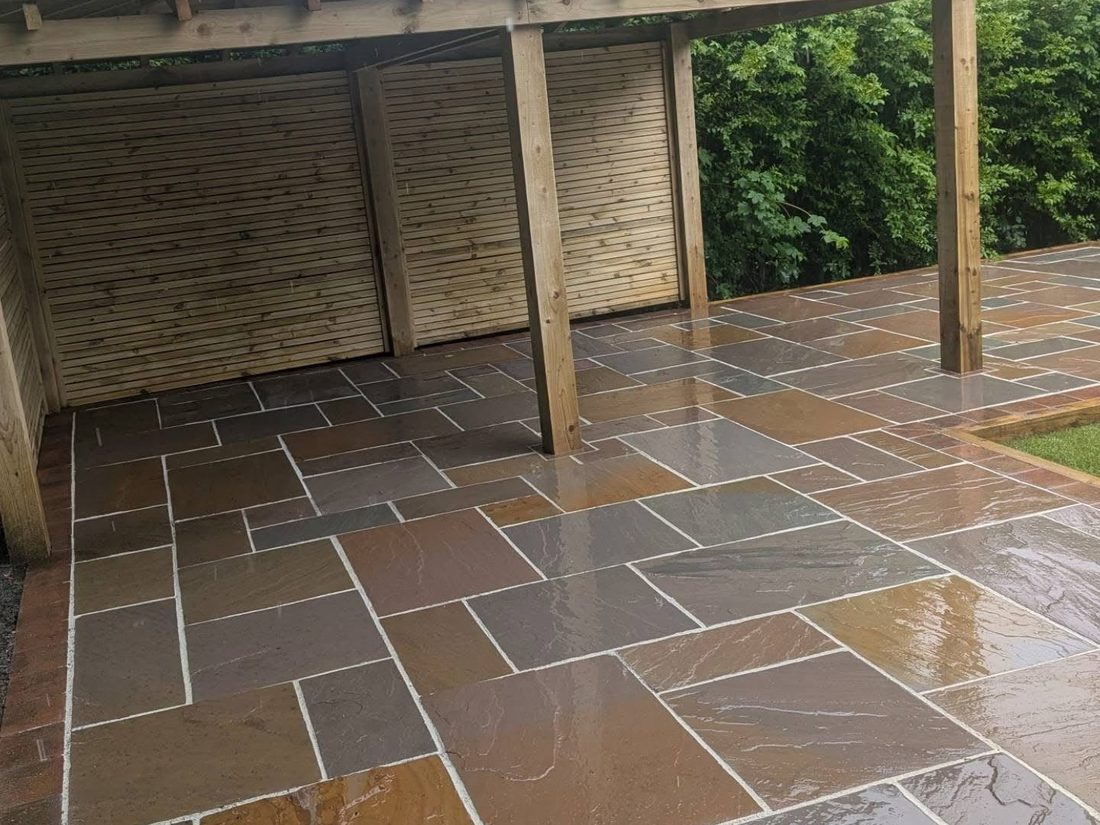
Indian sandstone patio laid under a timber pergola, Rightway, Salisbury
Indian sandstone patio laid under a timber pergola
What is included

Every patio, covered.

Full bed, not five blobs

Every slab goes down on a full wet mortar bed with the back primed where the material needs it. Slabs spot bedded on dabs sound hollow, crack under a table leg and let water sit underneath. It is quicker to lay and it is the single most common reason a patio fails.

Falls away from the house

A patio needs a slight fall away from the building and it must sit clear of the damp proof course. Getting either of those wrong turns a nice patio into a damp wall, and a lot of what we get called out to replace is exactly that.

Porcelain, sandstone or granite

Porcelain is dense, colour stable and stays clean but needs priming and precise cutting. Sandstone is warmer, cheaper and more forgiving. Granite is the hardest wearing of the three. We will show you samples wet as well as dry, because they all look different in the rain.

Jointed to last

Brush in or slurry applied jointing compound rather than dry sand, so joints stay put through winter and weeds have nowhere to start. Steps, edges and any level change built and finished properly rather than made up on the last day.

Questions

Asked and answered.

How long does a patio take to lay?

A typical rear patio of around twenty to thirty square metres is usually four to six working days including digging out, base, laying and jointing. Steps, walls, circle features and awkward access all add time, and the written estimate says which of those apply to yours.

Porcelain or sandstone, which is better?

Porcelain if you want it to look the same in ten years with minimal cleaning, and you do not mind paying more for the slab and the extra care in laying. Sandstone if you prefer a warmer, more natural look and are happy to wash it occasionally. Both are laid on a full bed either way.

Can you lay a patio over my existing one?

Almost never a good idea. It raises the level, which usually brings it too close to the damp proof course, and you inherit whatever is wrong underneath. Lifting the old one is not a big part of the cost and it is the difference between a patio and a problem.

Will the patio go green?

Anything in shade will pick up some algae eventually, sandstone sooner than porcelain. A wash once a year deals with it. What makes it far worse is standing water, which comes back to the falls and the bed, so a patio laid properly stays cleaner for longer.

Can you build steps and a path to match?

Yes, and it is normally the same visit. Steps, edging courses, a path round to the side gate and a bin standing are all much cheaper done while the materials, the muck away and the team are already there.
Coverage

Patios & Paths across Wiltshire and beyond

Based at New Street in Salisbury and working up to 100 miles out across Wiltshire, Hampshire, Dorset, Somerset and Berkshire, so a look at your job is rarely more than a couple of days away.

Planning a patio?

Send a photo or two through WhatsApp, or ring us, and we will come out and give you a free written estimate.

Contact

Get your free written estimate

Call us


Email


Find us

2 New Street, Salisbury SP1 2FG